Your Dedicated Knee Specialist
Knee Arthroscopy Treatment in Buffalo, NY
Knee pain is one of the most common complaints among adults, often caused by sports injuries, wear and tear, or sudden trauma. When persistent pain, swelling, or catching sensations keep you from walking comfortably or participating in the activities you love, it may be time to look beyond rest and ice. Knee arthroscopy is a minimally invasive surgical option that allows doctors to see inside the joint, diagnose the issue with precision, and treat it effectively without the need for large incisions. However, the success of your procedure often depends on the skill and attention of your surgeon.
At Buffalo Orthopedics, Dr. Parentis offers a patient experience that is hard to find in today’s healthcare environment. With over 25 years of experience, he operates a solo practice that feels more like a community than a clinic. As a double fellowship-trained surgeon in sports medicine and foot/ankle care, Dr. Parentis brings a high level of expertise to knee arthroscopy treatment. Unlike large systems where you might be passed between providers, here you will be seen many times by Dr. Parentis himself—the same doctor who will perform your surgery and guide your recovery. We are currently accepting new patients and are happy to provide second opinions or care for Workers' Compensation cases.
If you are looking for a knee specialist near you who values building real relationships and providing one-on-one care, you have found the right place. Contact Buffalo Orthopedics today to schedule your consultation and take the first step toward a pain-free life.
What is Knee Arthroscopy and How Does it Work?
Knee arthroscopy is a surgical technique that allows an orthopedic surgeon to view the inside of the knee joint without making a large incision. The knee arthroscopy procedure involves making small, buttonhole-sized cuts around the knee. Through one of these portals, Dr. Parentis inserts a small camera called an arthroscope. This camera sends high-definition images to a video monitor in the operating room, giving him a clear, magnified view of the structures inside your knee, such as cartilage, ligaments, and the lining of the joint.
Once the problem is clearly visualized, Dr. Parentis uses miniature surgical instruments inserted through other small portals to repair or remove damaged tissue. Because the procedure is minimally invasive, it causes less trauma to the muscles and tissues surrounding the knee compared to open surgery. This often results in less post-operative pain, smaller scars, and a faster return to daily activities. It is a highly effective tool for both diagnosing complex knee issues and providing targeted treatment.
How Do I Schedule an Appointment?
We strive to make accessing expert care as easy as possible. Buffalo Orthopedics is currently welcoming new patients, including those with Workers' Compensation or No-Fault claims. You don't need to navigate a complex hospital system to find an orthopedic surgeon in Williamsville, NY or the surrounding area; our solo practice is dedicated to serving the local community with a personal touch. You can schedule your appointment by calling our office directly. We look forward to meeting you and helping you resolve your knee pain.
Frequently Asked Questions About Knee Arthroscopy
What Does Knee Arthroscopy Treat or Help With?
Knee arthroscopy is a versatile procedure used to treat a wide variety of painful knee conditions. While it is often associated with sports injuries, it is also effective for degenerative conditions in patients of all ages. Dr. Parentis, an experienced knee orthopedic surgeon, typically recommends arthroscopy when non-surgical treatments like rest, physical therapy, and medications have failed to relieve symptoms.
Common conditions treated with knee arthroscopy include:
- Meniscus Tears: Trimming or repairing a torn meniscus (the cartilage that cushions the knee).
- Ligament Reconstruction: repairing a torn anterior cruciate ligament (ACL).
- Removing Loose Bodies: Clearing out fragments of bone or cartilage that are floating in the joint and causing locking or pain.
- Trim Damaged Cartilage: Smoothing out rough or torn articular cartilage.
- Synovitis: Removing inflamed joint lining (synovium).
- Plica Syndrome: Removing painful bands of tissue within the knee.
By addressing these mechanical issues directly, the surgery helps restore function and alleviate pain, helping you get back to your active lifestyle.
What Happens During a Knee Arthroscopy Appointment?
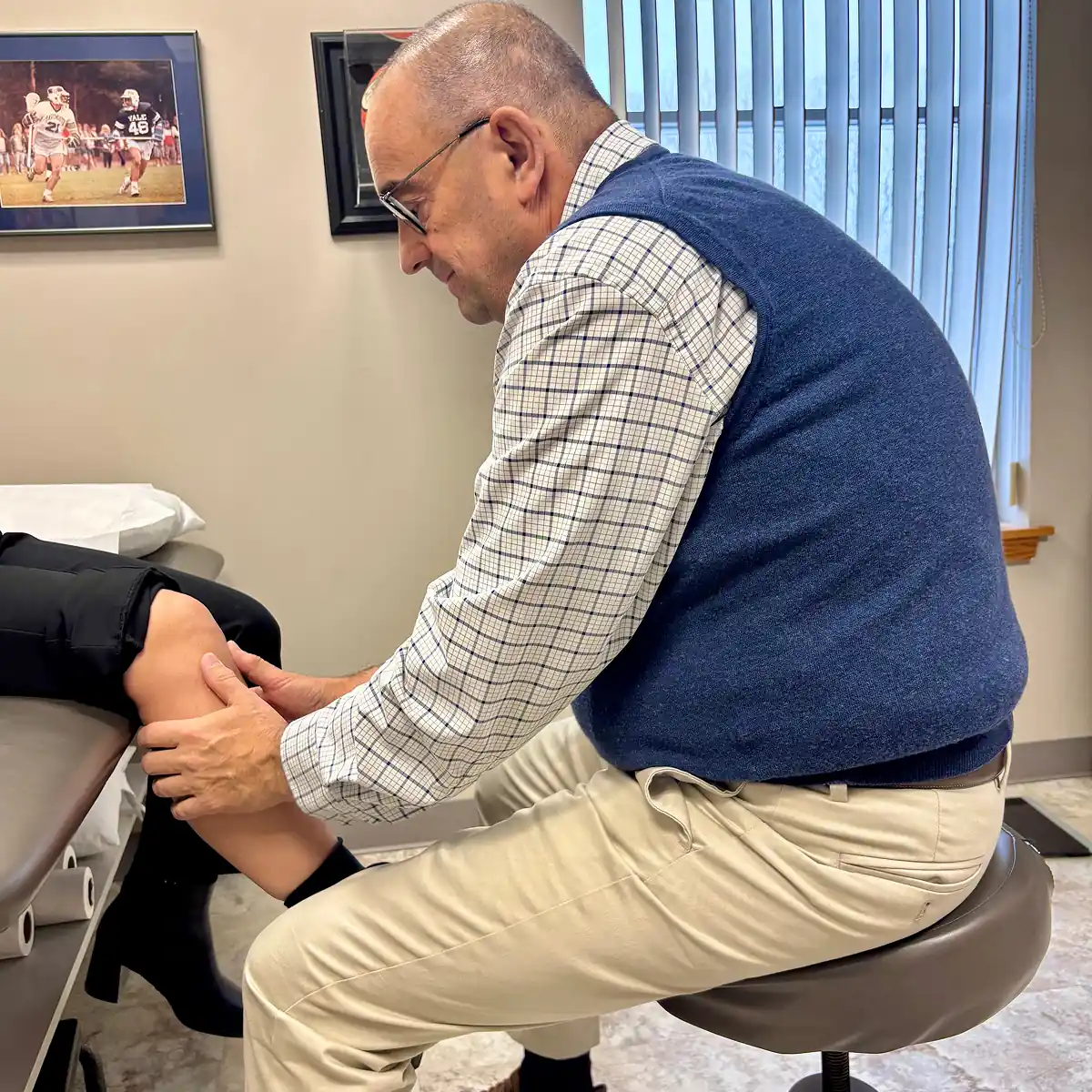
Your experience at Buffalo Orthopedics will most likely begin with a personal, one-on-one consultation with Dr. Parentis. Dr. Parentis believes in an individualized care approach. He will start by listening to your story—when the pain started, what makes it worse, and what your goals are for recovery. He will then perform a detailed physical examination of your knee to check for swelling, range of motion, and stability.
To confirm a diagnosis, he may review X-rays or an MRI scan. Once he has a complete picture of your condition, Dr. Parentis will explain his findings to you in plain language. He will discuss whether you are a candidate for knee arthroscopy treatment or if another approach, such as physical therapy or even arthroplasty knee replacement for severe arthritis, might be better. This is an open conversation where you can ask about everything from recovery times to insurance coverage. Dr. Parentis ensures you are fully informed and comfortable before moving forward.
Is Knee Arthroscopy Safe?
Knee arthroscopy is one of the most commonly performed orthopedic procedures and is generally considered very safe. When performed by highly skilled and best arthroscopic knee surgeons like Dr. Parentis, the risk of complications is low. His double fellowship training in sports medicine ensures he has the specific expertise required to navigate the knee joint with precision. The minimally invasive nature of the surgery also contributes to its safety profile, as smaller incisions reduce the risk of infection and blood loss compared to open surgery.
However, as with any surgery, there are potential risks. These can include infection, blood clots in the leg (deep vein thrombosis), excessive swelling, or damage to blood vessels or nerves. Dr. Parentis will discuss these risks with you in detail during your pre-operative consultation. He takes every precaution to minimize these risks, including the use of sterile techniques and post-operative protocols to prevent clots. His goal is to ensure your safety while delivering the best possible outcome for your knee health.
How is Knee Arthroscopy Different from Other Treatment Options?
The primary difference between knee arthroscopy and other surgical options lies in its minimally invasive approach. Traditional open knee surgery requires a large incision to open the joint, which involves cutting through muscle and tissue. This leads to more pain, a longer hospital stay, and a prolonged recovery period. In contrast, knee arthroscopic surgery uses tiny incisions, which preserves the surrounding muscle and allows for a much quicker recovery. Most patients go home the same day.
Compared to non-surgical treatments, arthroscopy offers a mechanical fix for mechanical problems. While physical therapy can strengthen the knee and injections can reduce inflammation, they cannot repair a torn meniscus or remove a loose piece of bone. Arthroscopy addresses the root cause of the mechanical symptoms (like locking or catching). However, for advanced arthritis where the joint is severely worn, arthroplasty knee surgery (total knee replacement) might be the more appropriate option. Dr. Parentis can help you navigate these choices to find the right solution for you.
How Long Does Recovery Take After Knee Arthroscopy?
Recovery from knee arthroscopy is generally faster than recovery from open knee surgery, but it still requires time and dedication to rehabilitation. The exact timeline depends on what specific procedure was performed (e.g., a simple trim of a meniscus heals faster than a ligament reconstruction). Immediately after surgery, you may have some swelling and discomfort, which can be managed with ice, elevation, and medication. You may need crutches for a few days to a few weeks.
Physical therapy is a crucial part of the recovery process. Dr. Parentis will provide a personalized rehabilitation plan to help you regain strength and motion. Most patients can return to desk work within a week and light daily activities shortly after. Return to more vigorous activities and sports usually takes several weeks to a few months, depending on the extent of the repair. Throughout your recovery, you will have follow-up appointments with Dr. Parentis to ensure your knee is healing properly and you are on track to meet your goals.